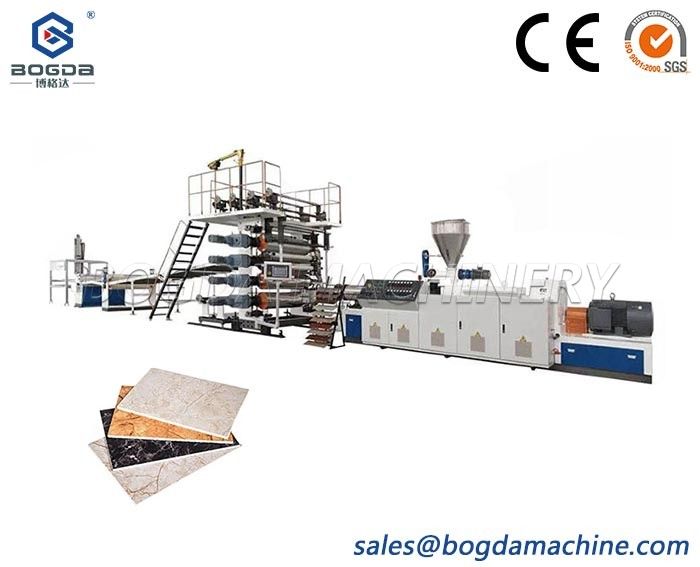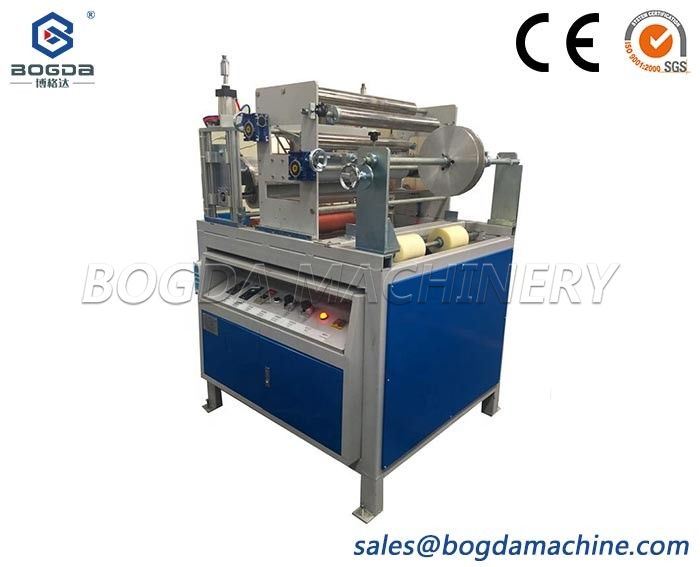
When I evaluate extrusion equipment, I do not treat the supplier’s rated capacity as the same as production capacity. How to Compare Rated Output and Stable Output in Extrusion Equipment requires separating the stated machine capacity from the qualified rate that can continue without unacceptable pressure variation, temperature drift, scrap, dimensional defects, or unplanned stops. This distinction is important for a Plastic Extrusion Line because a short-duration peak result may not represent the output available during a full production shift.
!
In this guide, I use a repeatable comparison method based on material, product, machine, and downstream conditions. I also show how to calculate extrusion machine throughput, normalize competing specifications, and design a factory acceptance test that verifies sustained qualified output rather than a brief maximum. BOGDA is included as a practical equipment reference because its product range covers sheet, board, pipe, profile, film, pelletizing, and recycling extrusion systems.
I begin with six output terms because suppliers and buyers often use them interchangeably. Rated output is the supplier’s stated capacity under specified conditions, while stable output is the qualified production rate maintained over a defined period without unacceptable variation, scrap, pressure instability, temperature drift, or dimensional defects. The minimum comparison requires the same resin, product specification, screw speed, melt temperature, die, cooling system, haul-off speed, and measurement method.
A basic throughput calculation is:
Output (kg/h) = collected qualified product mass (kg) ÷ productive running time (h)
For a more useful production figure, I calculate:
Stable production rate = qualified product mass ÷ scheduled production time
The second formula includes stoppages, adjustments, and rejected material during the test period. It therefore gives a closer estimate of actual production capacity than a short run measured only while the screw is turning.
Rated output usually appears in a machine specification as a capacity such as 300 kg/h or 600 kg/h. It may describe a tested result, a design target, or a maximum under a particular polymer and product configuration, so I always ask for the exact test conditions. Without those conditions, the number cannot be compared fairly with another machine’s output.
Nominal output is commonly used as a normal design capacity. It may be lower than the maximum mechanical capability and can be more useful for planning, but it still requires a defined resin, product, and downstream configuration. Peak output is the highest short-duration rate achieved before pressure, melt temperature, product dimensions, motor load, or surface quality moves outside the permitted range.
Stable output is the sustained rate that remains inside the agreed operating window. For example, a line might briefly reach 500 kg/h, but if pressure oscillation, thickness variation, edge trim, or cooling limitations appear after 20 minutes, 500 kg/h should not be treated as the stable output. A more realistic stable result might be 420 kg/h if that rate remains qualified for several hours.
Qualified output is stable output that also meets the product specification. Saleable output goes one step further by excluding startup waste, off-specification material, trim loss, rejected rolls, nonconforming pipes, and other material that cannot be shipped. For investment decisions, I use saleable output because it connects machine performance to revenue and production yield.
| Output term | Meaning | Typical use in buying decisions |
|---|---|---|
| Rated output | Stated capacity under specified conditions | Initial specification screening |
| Nominal output | Normal design or expected operating capacity | Preliminary production planning |
| Peak output | Highest short-duration rate before limits are exceeded | Capacity ceiling, not production promise |
| Stable output | Sustained rate within process and quality limits | Main comparison figure |
| Qualified output | Stable output that meets product specifications | Factory acceptance testing |
| Saleable output | Qualified output minus waste and rejected material | Cost, revenue, and ROI calculations |
When I compare extrusion machine throughput, I first document the material. The test record should include polymer type, grade, melt-flow specification, moisture condition, percentage of regrind, filler or additive content, and batch identification. A machine that produces 450 kg/h with one polyethylene grade cannot automatically be compared with a machine producing 450 kg/h using a different grade, moisture level, or formulation.
The product specification must also remain fixed. I record width, thickness, diameter, wall thickness, density, profile geometry, layer structure, and permitted tolerances. For example, a sheet line running at 600 kg/h with a 3.0 mm sheet is not directly comparable with a line running at 600 kg/h with a 0.5 mm sheet if cooling, haul-off, winding, and dimensional requirements are different.
Machine and downstream conditions are equally important. I record screw diameter, screw design, screw speed, motor load, feed rate, barrel temperature, die temperature, melt pressure, melt temperature, cooling-water temperature, haul-off speed, cutter or winder speed, and line configuration. For a complete Plastic Extrusion Line, the die, calibration unit, cooling system, haul-off, cutting equipment, and winding system can limit production even when the extruder itself has additional capacity.
To normalize two supplier quotations, I convert both results to the same product and operating basis. The comparison should identify whether the figures use the same resin grade, product weight per meter, screw speed range, pressure level, temperature profile, die opening, cooling capacity, and line speed. If any of these variables changes, I mark the comparison as conditional rather than treating the two numbers as equivalent.
A practical normalization table can include the following fields:
I also separate mass output from product output. A sheet line may report gross kilograms per hour before edge trim, while a pipe line may report production before cutting losses. To compare actual production capacity, I calculate saleable yield as saleable product mass ÷ total consumed material mass × 100 and record the result beside the stated output.
Stable output in extrusion manufacturing is not measured by kilograms per hour alone. I monitor the moving average of mass flow, short-term variation, melt pressure, melt temperature, product dimensions, scrap, and uptime. A line that maintains 400 kg/h but produces variable wall thickness or frequent rejected sections does not provide the same commercial value as a line producing 390 kg/h within specification.
The following example thresholds can be used as a starting point for a buyer-defined acceptance protocol. They are not universal standards, so I adjust them to the product specification and customer requirements.
| Measurement | Example acceptance threshold | Why it matters |
|---|---|---|
| Average mass-flow variation | Within ±3% of test average | Shows throughput consistency |
| Melt-pressure variation | Within ±5% of test average | Indicates conveying and melt stability |
| Melt-temperature drift | Within ±2°C of set test value | Limits viscosity and quality changes |
| Product thickness or wall variation | Within the agreed product tolerance | Confirms qualified output |
| Startup and process scrap | Preferably below 3% after stabilization | Connects output to saleable yield |
| Productive uptime during test | At least 95% of scheduled test time | Shows operational continuity |
For higher-tolerance products, I use narrower limits. For example, medical, electrical, automotive, or precision profile applications may require a product-specific dimensional tolerance that is much tighter than a general-purpose board or packaging sheet. The correct threshold is therefore the customer specification, not a generic percentage selected only to make the machine appear stable.
Actual extruder output is often lower than rated output because the published figure may assume a favorable resin, high screw speed, optimized temperature, low moisture, and a downstream line configured for maximum capacity. In real production, the operator may reduce speed to protect melt quality, prevent surging, maintain thickness, or match the cooling and haul-off system. Product specifications can also impose a lower sustainable rate.
Material behavior is a major factor. A polymer with higher viscosity, lower bulk density, greater filler content, or inconsistent moisture may require a lower feed rate or screw speed. PET and other moisture-sensitive materials may need controlled drying, while PVC processing may require careful temperature management to reduce thermal degradation and maintain stable plasticization.
Downstream restrictions can reduce the practical rate even when the extruder has unused motor capacity. Cooling, sizing, haul-off traction, die pressure, winding tension, cutter speed, and inspection requirements may become the limiting factors. I therefore ask suppliers to provide output data for the complete line, not only the extruder barrel.
I design the factory acceptance test around the buyer’s actual product rather than an unrelated demonstration material. The written test plan should define the resin grade, material preparation, product dimensions, die, screw speed, temperature settings, cooling conditions, line speed, measurement instruments, test duration, sampling intervals, and acceptance limits. Every change during the test should be recorded with a timestamp.
The test should include a stabilization period followed by a continuous qualification period. As an example, I may specify 30 to 60 minutes for stabilization and 4 to 8 hours for qualification, depending on the product and line size. During qualification, the supplier should record mass output, melt pressure, melt temperature, motor load, screw speed, product dimensions, scrap, stoppages, and energy consumption at defined intervals.
The acceptance calculation should distinguish gross and qualified production. I use the following scorecard:
| Scorecard item | Formula or check |
|---|---|
| Gross throughput | Total extruded mass ÷ screw-running hours |
| Stable throughput | Qualified mass ÷ qualified running hours |
| Saleable output | Accepted product mass ÷ scheduled test hours |
| Yield | Saleable product mass ÷ total material consumed × 100 |
| Uptime | Productive time ÷ scheduled test time × 100 |
| Energy intensity | Total electricity consumed ÷ saleable kilograms |
| Stability | Recorded variation compared with agreed limits |
A factory acceptance test passes only when the output rate and product quality pass together. If the machine reaches the target kilograms per hour but fails pressure, temperature, dimensional, scrap, or uptime limits, I classify the result as a peak demonstration rather than qualified stable output.
Higher extrusion output does not always mean lower cost per kilogram. I calculate energy intensity as kWh/kg = total electricity consumed ÷ saleable product kilograms, because a high gross rate with excessive scrap may produce a worse result than a slightly lower rate with better yield. I also include labor, resin loss, maintenance, downtime, tooling changes, and rejected material in the total cost of ownership calculation.
For production planning, I use stable saleable output rather than the catalog maximum. If annual demand is 1,200 tonnes and the line provides 400 kg/h of saleable output for 6,000 productive hours, the calculated annual capacity is 2,400 tonnes before additional shutdown allowances. If the supplier’s rated output is 500 kg/h but stable saleable output is only 400 kg/h, using the rated figure would overstate available capacity by 25%.
This difference affects equipment sizing and payback. A smaller line with predictable stable output may require fewer corrective stops and produce less waste, while a larger line may create higher energy, tooling, cooling, or staffing costs. I compare the complete operating profile instead of selecting equipment solely by the largest number in a quotation.
For a small extrusion business, I recommend prioritizing a documented stable-output range that matches the order profile. A machine rated far above normal demand may operate inefficiently if the process is frequently run at low load or requires repeated setup changes. The buyer should request output data at the intended product dimensions and material grade, not only the maximum advertised capacity.
For high-volume manufacturing, I focus on continuous qualification, line balance, automatic control, spare-parts access, and data recording. BOGDA’s equipment categories include plastic sheet, board, pipe, profile, film, pelletizing, and recycling lines, so the correct evaluation should be made against the selected configuration rather than the manufacturer name alone. I would request a model-specific output sheet that identifies the resin, product, die, screw speed, temperature, pressure, and downstream equipment used to obtain each figure.
Before signing an order, I ask for three separate numbers: peak output, stable qualified output, and expected saleable output. I also request the proposed factory acceptance test, calibration records for weighing and pressure instruments, product tolerances, test duration, and the remedy if the equipment fails the agreed criteria. These documents turn a general capacity claim into a measurable purchasing condition.
How to Compare Rated Output and Stable Output in Extrusion Equipment begins with one practical rule: rated output is a stated capacity, while stable output is the qualified rate maintained under controlled material, machine, product, and downstream conditions. I compare the two by recording mass flow, pressure, temperature, dimensions, scrap, uptime, energy use, and saleable yield rather than relying on a short peak demonstration.
The next step is to create a buyer-side scorecard with fixed resin, product dimensions, screw speed, temperature, pressure, die, cooling, haul-off, and acceptance limits. I then require a factory acceptance test long enough to reveal pressure drift, thermal changes, dimensional variation, downtime, and waste. For a Plastic Extrusion Line from BOGDA or any other supplier, stable output should be the primary figure used for capacity planning, production yield, operating cost, and return-on-investment calculations.


Copyright © Bogda Machinery Group All Rights Reserved | Sitemap