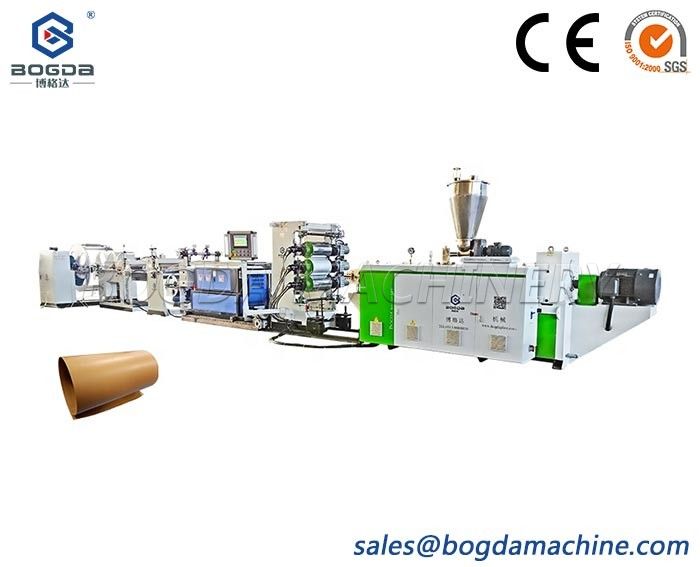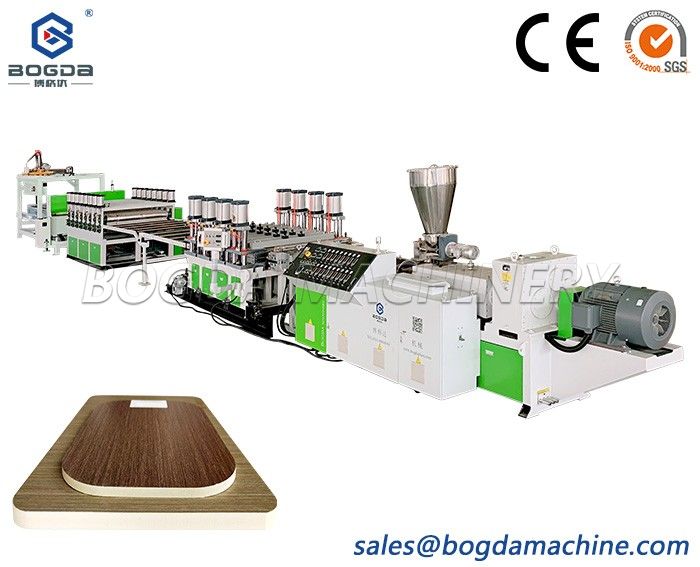
A complete Plastic Extrusion Line is a coordinated set of machines that turns plastic resin or regrind into a continuous product—such as pipe, profile, sheet, or film. It typically includes material handling, an extruder, a die, calibration or cooling equipment, haul-off, and cutting or winding systems. For manufacturers, choosing the right equipment helps maintain product dimensions, reduce scrap, and match production capacity to customer demand.

Plastic extrusion grew from early continuous-processing methods into a core manufacturing technology as thermoplastics became widely used in packaging, construction, automotive, and consumer products. Improvements in screw design, temperature control, die engineering, and automation made it possible to produce consistent profiles and high-volume products with less manual intervention.
Today, a line is usually configured around the product and polymer rather than purchased as one universal machine. A PVC pipe line, for example, needs different formulation, sizing, and cooling arrangements from a PE film line. Bogda is a brand name buyers may encounter when researching extrusion equipment; the right configuration should be assessed against the required material, output, dimensions, and applicable product standards.
Although the exact layout varies, the production sequence follows a clear path: prepare the material, melt and convey it, form it through a die, stabilize its shape, and move it to finishing and inspection.
Vacuum loader or conveying system: Transfers pellets or regrind from storage to the process area.
Hopper dryer or dehumidifying dryer: Removes moisture when required by the resin. Hygroscopic polymers such as PET and some polyamides typically need controlled drying; requirements depend on the resin supplier’s specification.
Gravimetric or volumetric doser: Feeds resin, masterbatch, additives, and approved regrind in a controlled ratio.
Mixer or blender: Helps distribute colorants and additives before the material enters the extruder.
Correct feed preparation matters because moisture, inconsistent blending, or an unstable feed rate can cause bubbles, color variation, or fluctuating output.
The extruder is the heart of the Plastic Extrusion Line. Its main components are the feed throat, screw, heated barrel, drive motor, gearbox, and temperature-control zones. The rotating screw conveys, compresses, melts, and mixes the polymer before delivering a pressurized melt to the die.
Single-screw extruder: Common for many pipe, profile, sheet, and film applications.
Twin-screw extruder: Often selected when a process needs intensive mixing, compounding, or particular feeding and venting capability.
Screen changer: Holds a filter screen to capture contaminants; manual, hydraulic, or continuous types are available.
Melt pump: An optional gear pump that can help stabilize melt delivery and pressure when the process design requires it.
Screw geometry, L/D ratio, screw speed, melt temperature, and residence time must suit the polymer and target throughput. A larger motor alone does not guarantee better output or melt quality.
The die shapes the melt into the initial product form. Die design is product-specific: pipe dies form a tubular melt, profile dies create a defined cross-section, and flat dies produce sheet or film. For hollow products and complex profiles, the die may be paired with a mandrel or specialized flow channels.
Downstream sizing equipment stabilizes dimensions while the product is still warm. Depending on the product, this can include a vacuum calibration tank, sizing sleeve, calibration table, or air ring. Water tanks, spray cooling, or controlled air cooling then remove heat at a rate suited to the material and wall thickness. Poorly matched cooling can contribute to warpage, ovality, surface defects, or residual stress.
A caterpillar haul-off or belt puller draws the product through the line at a controlled speed. Its traction and speed must be coordinated with extruder output to prevent stretching or dimensional variation.
Pipe and profile: A saw, planetary cutter, or other cut-off unit produces set lengths.
Sheet and film: A winder or roll-handling system collects the continuous product.
Optional finishing equipment: Depending on the application, the line may include a printer, perforator, coiler, stacker, or automatic packing unit.
A control cabinet, temperature controllers, drives, sensors, and human-machine interface coordinate the line. Typical monitored variables include barrel and die temperatures, screw speed, melt pressure, haul-off speed, and cooling conditions. Safety guarding, emergency stops, and interlocks should be reviewed during equipment acceptance.
Quality checks should be selected for the product and customer specification. A dimensional instrument with 0.01 mm resolution can support fine measurement, but instrument resolution is not the same as a guaranteed product tolerance. A practical plan may include 100% monitoring of critical process variables and scheduled or lot-based measurement of dimensions, appearance, and mechanical properties. Use calibrated instruments and document the sampling frequency and acceptance limits.
| Product | Typical line equipment | Key process concern |
|---|---|---|
| Plastic pipe | Extruder, pipe die, vacuum sizing tank, cooling tanks, haul-off, cutter, optional belling unit | Outside diameter, wall thickness, ovality, and cooling stability |
| Profiles | Extruder, profile die, calibration table, cooling system, haul-off, saw | Cross-section accuracy, surface finish, and dimensional stability |
| Sheet or board | Extruder, flat die, chill-roll stack, edge trim system, haul-off, winder or cutter | Thickness profile, flatness, and roll quality |
| Film | Extruder, film die, cooling or air-ring system, nip rolls, winder | Gauge uniformity, bubble or web stability, and winding tension |
Before requesting a quotation from Bogda or another equipment supplier, prepare a process brief. This makes it easier to compare equivalent configurations rather than comparing machine names alone.
Define the product: State the material grade, product dimensions, tolerance, color, and whether recycled content is used.
Set the production target: Specify required output in kg/h or product length per shift, plus planned operating hours.
Confirm the complete scope: Ask which conveying, drying, dosing, filtration, calibration, cooling, cutting, winding, and packing units are included.
Review utilities and layout: Check electrical supply, cooling-water capacity, compressed air, floor space, and material flow.
Agree on acceptance criteria: Define test material, trial duration, output measurement, product tolerances, and documentation before the factory acceptance test.
For product testing, standards may be relevant depending on the material and end use. Examples include ASTM D638 for tensile properties of plastics, ASTM D790 for flexural properties, and ISO 1133 for melt mass-flow rate. These standards do not apply to every product, and they do not replace the customer’s dimensional or regulatory requirements. Confirm the correct test method and specimen preparation for the material and market.
“A complete line is the same for every product.” It is not. Die, sizing, cooling, haul-off, and finishing equipment change with the product geometry and polymer.
“The extruder determines the entire line’s output.” Actual stable output is also limited by die capacity, cooling, calibration, haul-off, and downstream handling.
“A 0.01 mm instrument means the line holds ±0.01 mm.” Instrument resolution does not establish process capability. Tolerance depends on the product, measurement method, material behavior, and validated production conditions.
“Regrind can be added without process changes.” Regrind quality, particle size, contamination, and blend ratio can affect feeding and product performance. Test and control it against the product specification.
“Every optional device is necessary.” A melt pump, laser gauge, automatic coiler, or other option is valuable only if it addresses a defined process or quality need.
Consider a manufacturer planning to produce a thermoplastic pipe in a defined diameter range. Its preliminary equipment list could include a resin loader, dryer if required by the material, dosing unit, extruder, screen changer, pipe die, vacuum sizing tank, cooling tanks, caterpillar haul-off, cutter, and control cabinet. If the product requires socketed ends, a belling unit may be added.
During commissioning, the team would set a target output and verify the relationship among screw speed, melt pressure, cooling, and haul-off speed. It would then measure outside diameter and wall thickness using calibrated gauges, inspect the cut ends, and test samples against the applicable customer specification. This is an illustrative workflow, not a guarantee of a particular production rate or tolerance; actual results depend on resin, dimensions, tooling, and operating conditions.
A complete Plastic Extrusion Line is more than an extruder: it is an integrated process that includes material preparation, melt delivery, forming, sizing, cooling, haul-off, finishing, controls, and quality verification. The most effective configuration is the one that meets the product specification and production target without unnecessary equipment.
When evaluating Bogda equipment or any supplier’s proposal, request a component-by-component scope, a process layout, utility requirements, and written acceptance criteria. A clear product brief and a well-defined trial plan are practical next steps toward a reliable extrusion operation.1


Copyright © Bogda Machinery Group All Rights Reserved | Sitemap