When I compare Cost and Material Trade-Offs in Single-Layer and Co-Extruded Sheets, I separate the decision into two layers: the cost of producing the sheet and the value delivered during use. Single-layer sheets usually require less equipment and process control, while co-extruded sheets can reduce the amount of expensive resin used and add barrier, surface, or structural functions. The correct choice therefore depends on resin prices, production volume, scrap rate, required performance, and end-of-life requirements.
!
The main cost difference is not simply the price of one extruder versus two or three extruders. I evaluate resin consumption, startup scrap, energy, labor, tooling, maintenance, freight, rework, and the financial effect of rejected sheets. A single-layer line often wins when the product specification is simple and production volume is modest, while co-extrusion becomes more attractive when a costly resin can be limited to a thin skin or functional layer.
| Evaluation factor | Single-layer sheets | Co-extruded sheets |
|---|---|---|
| Upfront equipment cost | Lower; one main melt stream and simpler downstream integration | Higher; requires multiple extruders, feed systems, layer-control equipment, and a co-extrusion die |
| Material efficiency | Uses one formulation throughout the sheet, which may require more premium resin | Uses skins, cores, recycled content, or barrier layers where each material is needed |
| Operating complexity | Easier startup, changeover, troubleshooting, and quality control | More process variables, including layer ratios, melt compatibility, temperature balance, and tie-layer control |
| Performance range | Suitable for uniform stiffness, appearance, and basic protection | Suitable for combined surface, barrier, impact, recycled-content, and structural requirements |
| Scrap and rework | Lower process complexity can reduce startup losses | More startup waste may occur, but optimized layer design can reduce expensive resin waste |
| Best-fit applications | Standard packaging, signs, trays, liners, and uncomplicated fabricated parts | Barrier packaging, decorative panels, impact-resistant sheets, recycled-core structures, and demanding industrial products |
A single-layer sheet is formed from one melt stream with a uniform material structure through its thickness. The polymer may contain additives, fillers, colorants, or recycled content, but the sheet remains materially consistent from the top surface to the bottom surface. This design simplifies extrusion, cooling, trimming, inspection, and recycling when the sheet is made from one polymer family.
A co-extruded sheet combines two or more melt streams in one die to create separate layers. A typical structure may use a high-appearance skin, a lower-cost or recycled core, and a functional layer for impact resistance, chemical resistance, or gas and moisture control. The layers must be compatible in melt temperature, viscosity, adhesion, and cooling behavior, or the sheet may develop warpage, delamination, thickness variation, or surface defects.
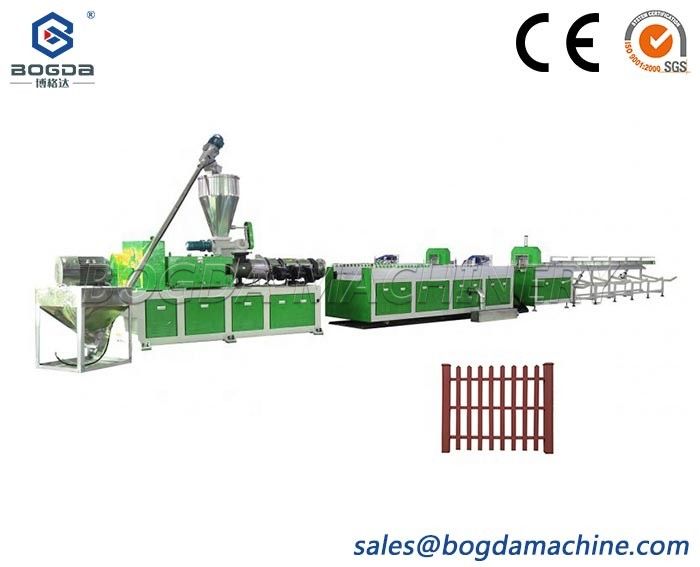
BOGDA describes its Plastic Sheet Extrusion Line configurations for materials including PET, PVC, PP, PS, PC, and ABS. Published example ranges include PET sheets from 0.17 to 2.0 millimeters with widths from 600 to 1,220 millimeters and output capacities from 200 to 1,000 kilograms per hour. These figures show why equipment selection must be tied to polymer type, sheet thickness, width, and output rather than selected from a generic machine rating.
For a useful single-layer vs co-extruded sheets cost comparison, I divide the total conversion cost into measurable categories. The basic formula is: total sheet cost per kilogram = resin cost + scrap cost + energy cost + labor cost + tooling amortization + maintenance + freight allocation + rework cost. Comparing only resin prices can produce the wrong decision because a cheaper formulation may generate higher scrap, more rework, or shorter service life.
Single-layer production can be economical when one resin already meets the complete specification. If a sheet requires premium impact resistance, optical clarity, flame performance, or chemical resistance throughout its thickness, using one formulation avoids layer-compatibility problems and simplifies purchasing. The disadvantage is that the manufacturer pays for the premium material across the entire cross-section, even when only the surface requires that performance.
Co-extrusion allows the manufacturer to place expensive material where it produces measurable value. For example, a 10 percent functional skin over a 90 percent standard or recycled core can reduce premium-resin consumption by approximately 90 percent compared with making the entire sheet from that material. The actual saving depends on layer ratio, yield, scrap, and whether the core material meets stiffness, appearance, food-contact, or regulatory requirements.
Single-layer lines generally have fewer startup conditions to balance, so they can produce less setup scrap when operators change grades or thicknesses. Internal edge trim and clean process scrap may also be easier to return to the same formulation. However, if a single-layer sheet fails because its entire thickness lacks barrier, surface, or impact performance, the rejected material represents a full-value resin loss.
Co-extrusion can create additional startup scrap because each extruder, melt channel, and layer ratio must stabilize. I assess this loss by measuring kilograms discarded during startup, changeover, and off-spec production. If the co-extruded design saves more expensive resin on every saleable kilogram than it loses during setup, the additional process waste may be financially justified.
A single-layer line normally has fewer heaters, motors, feeders, control loops, and melt paths. That can reduce installed electrical capacity and simplify preventive maintenance. Co-extrusion adds equipment, but the energy penalty is not always proportional to the number of extruders because the total throughput, sheet thickness, cooling demand, and residence time remain the main drivers.
I compare energy using kilowatt-hours per kilogram rather than total monthly electricity. A co-extrusion line that consumes 0.10 kilowatt-hours more per kilogram but reduces premium resin usage by $0.35 per kilogram may still lower conversion cost. The decision should use measured line data after stabilization, not only the connected-load figure on an equipment quotation.
Single-layer tooling usually has fewer flow channels and fewer adjustments, which reduces initial die complexity and maintenance requirements. Operators also have fewer variables to monitor during production. This is important for small manufacturers with limited process engineering support or frequent product changes.
Co-extrusion requires a multi-manifold or feedblock design, additional extruders, gravimetric or volumetric dosing, and closer control of melt pressure and temperature. The tooling premium should be amortized over the expected saleable output, not over the maximum theoretical capacity. If a die costs $60,000 more and the manufacturer expects 600,000 saleable kilograms over its useful period, the tooling premium alone is $0.10 per kilogram before maintenance and financing.
The co-extruded sheet performance and durability advantage appears when each layer performs a defined function. A harder or glossier skin can improve surface appearance, while a tougher core can increase impact resistance without requiring the complete sheet to use the most expensive formulation. A barrier layer can limit oxygen, moisture, aroma, or chemical transmission when the application and material combination are properly engineered.
Single-layer sheets provide predictable behavior because the entire thickness expands, cools, welds, and responds to forming conditions as one material system. This can simplify thermoforming and fabrication, particularly when the sheet is used for trays, liners, covers, stationery products, or basic protective panels. The limitation is that one formulation must provide every required property, which may increase material cost or create compromises between stiffness, toughness, appearance, and recyclability.
A single-layer sheet can deliver consistent color and surface chemistry across its full thickness. This is useful when the sheet will be machined, cut, drilled, polished, or thermoformed in a way that exposes the interior. It also avoids visible interface lines that may appear if a co-extruded structure has uneven layer flow or poor adhesion.
Co-extrusion can improve appearance by placing a clean, colored, matte, glossy, or scratch-resistant skin over a less expensive core. The surface layer must remain thick enough to survive downstream trimming, forming, and service conditions. If the skin is too thin or poorly distributed, small thickness variations may create visible shade differences, gloss variation, or exposed core material.
A single-layer formulation is often easier to process because its melt viscosity and cooling behavior are uniform. The manufacturer can optimize screw speed, die temperature, roll temperature, and haul-off speed around one material. This is especially useful when the sheet specification is stable and the production team values short changeovers.
Co-extrusion can create a better stiffness-to-cost balance by combining a structural core with functional skins. It can also combine a recycled or filled core with a cleaner outer layer, provided the core does not create warpage, odor, contamination, or poor weld performance. During trials, I would measure thickness variation, flatness, impact results, forming behavior, layer adhesion, and visible surface defects instead of judging the structure only by nominal resin cost.
Co-extrusion affects material usage in two opposing ways. It can reduce waste of expensive resin by restricting that material to a surface or barrier layer, but it can also increase setup scrap and make off-spec material harder to reuse. The net result depends on production length, changeover frequency, layer ratio, internal recycling rules, and whether the finished sheet is accepted by downstream customers.
Mono-material single-layer sheets generally have a simpler end-of-life route. A PP sheet made entirely from compatible PP grades is easier to sort and recycle than a structure combining PP, adhesive tie layers, EVOH, PET, or other polymers. Mixed-material multilayer sheets may deliver better functional performance, but recycling can require separation, specialized processing, or downcycling into products with lower specification requirements.
For that reason, I include end-of-life cost in the material review. A co-extruded sheet may reduce production cost by $0.20 per kilogram but create a $0.05 to $0.15 per kilogram sorting or recycling disadvantage, depending on local collection and processing conditions. These values must be confirmed for the target market, because recycling infrastructure and customer requirements vary by region.
Co-extrusion is not automatically cheaper than single-layer extrusion. The equipment, die, controls, commissioning, maintenance, and operator-training premiums mean that the multilayer option often carries a higher fixed cost. It becomes financially attractive when the variable savings from resin optimization, lower product rejection, longer service life, or improved selling value exceed those fixed and operating premiums.
I use a break-even equation: break-even kilograms = additional fixed investment ÷ savings per saleable kilogram. If a co-extrusion project adds $180,000 in equipment and tooling, while layer optimization saves $0.30 per saleable kilogram, the break-even volume is 600,000 kilograms. If the line produces 1,000 kilograms per hour and operates 2,000 saleable hours annually, the theoretical annual output is 2 million kilograms, but the calculation should use the realistic production plan after maintenance, changeovers, and demand limits.
The break-even point moves further away when the manufacturer runs many short batches. Frequent purging, color changes, and layer-ratio adjustments can increase scrap and labor. Long production campaigns, stable formulations, and high-volume products usually provide better conditions for recovering the co-extrusion premium.
The best choice depends on the function of the finished product rather than the extrusion technology alone. In packaging, a single-layer sheet may be sufficient for general trays or containers, while a co-extruded structure may be justified for barrier, sealing, appearance, or recycled-content requirements. In construction and industrial products, the decisive factors may be stiffness, impact resistance, surface durability, fastening behavior, and long-term dimensional stability.
| Application condition | More suitable starting point | Reason |
|---|---|---|
| Low volume and frequent material changes | Single-layer sheet | Lower tooling complexity and easier changeovers |
| High volume with expensive surface resin | Co-extruded sheet | Premium resin can be limited to a thin skin |
| Need for a recycled core with clean appearance | Co-extruded sheet | Separates appearance requirements from core material cost |
| Strict mono-material recycling requirement | Single-layer sheet | Simpler material identification and recovery |
| Barrier or chemical-resistance requirement | Co-extruded sheet | Adds a defined functional layer without using it throughout |
| Uniform stiffness and simple forming | Single-layer sheet | Consistent melt and predictable forming behavior |
| Multiple performance requirements in one product | Co-extruded sheet | Assigns different functions to different layers |
BOGDA’s published sheet-line examples show why I would specify the application before selecting equipment. PET lines may cover transparent packaging and thermoforming materials, while PVC, PP, PS, PC, and ABS configurations address different processing and performance requirements. Width, thickness, output, moisture control, filtration, cooling, and downstream cutting or winding should all be confirmed against the intended product.
Before requesting a single-layer or co-extruded line quotation, I prepare a product specification with measurable targets. The specification should include sheet width, thickness range, thickness tolerance, annual volume, batch size, resin grades, recycled-content percentage, color changes, surface requirements, forming conditions, and expected service life.
I then compare at least two production scenarios using the same assumptions. One scenario should calculate the single-layer cost per saleable kilogram, while the other should include additional extruders, co-extrusion tooling, layer-control equipment, startup scrap, energy, labor, maintenance, and end-of-life handling. The comparison should also include sensitivity cases for resin prices changing by 10 percent, output falling by 20 percent, and scrap increasing by 2 percentage points.
For equipment discussions, I would ask BOGDA to confirm the proposed Plastic Sheet Extrusion Line against the required material structure and output. The published BOGDA information identifies complete line functions such as feeding, extrusion, sheet forming, cooling, trimming, and winding, but the final configuration must be matched to the selected polymer, sheet geometry, and production targets. Trial production should verify layer distribution, flatness, surface quality, output stability, and material recovery before commercial approval.
Cost and Material Trade-Offs in Single-Layer and Co-Extruded Sheets should be evaluated through total cost per saleable kilogram, not equipment price or resin price alone. Single-layer sheets usually offer lower capital cost, simpler operation, easier recycling, and predictable processing when one material can meet the full specification. Co-extruded sheets can justify their additional cost when skins, cores, recycled content, or functional layers reduce premium resin consumption or provide performance that a uniform sheet cannot deliver.
I recommend calculating the break-even volume, measuring startup scrap, assigning energy and labor costs, and including end-of-life handling before choosing a structure. For low-volume products with simple requirements, single-layer extrusion is often the more practical starting point. For high-volume products requiring barrier properties, improved appearance, recycled cores, or targeted durability, a properly designed co-extrusion line may provide lower lifecycle cost and better application performance.


Copyright © Bogda Machinery Group All Rights Reserved | Sitemap